
Twisted Tree
Guest Interview with Ben Woodard on Eugenics, MAHA, and the Politics of Biological Fear

This summer, Acid Horizon Research Commons is joined by Ben Woodard, who will present his course Twisted Tree: Eugenics Historical and Contemporary, a critical examination of the history, philosophy, and contemporary resurgence of eugenic ideology. We caught up with Ben to discuss his upcoming course and get his perspective on the trends in para-academic learning. Navigate here to learn more about his course among other summer offerings at Acid Horizon Research Commons.
Twisted Tree begins June 11th and is scheduled so that those in North American and UK/European time zones can participate.
First of all, why the title ‘Twisted Tree’? Where does this particular image sit in the history of eugenic modes of thinking?
The tree metaphor is an image which is borrowing from two other related images. First, it references the tree of life — the genealogical branching of species popularized by Darwin but predating him — and how it was applied to races as well (most famously by Ernst Haeckel). The tree was used by those who believed in teleological or progressive evolution to represent human racial hierarchies. Furthermore, the intentional confusion and collapse of race and biology has always been central to eugenics, especially as it began as a migration of animal husbandry (controlled breeding) to human beings.
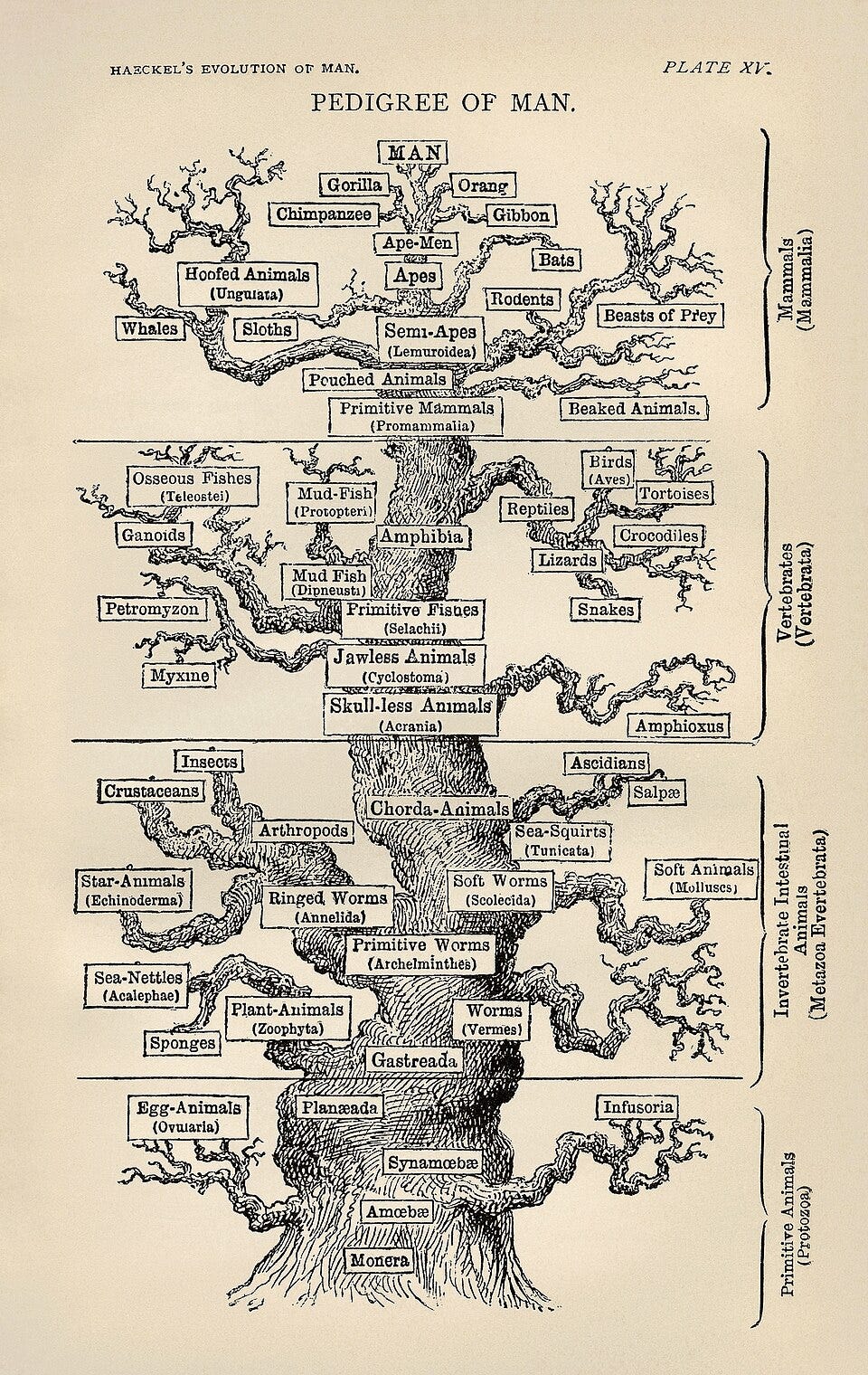
The other tree image referenced is Kant’s comment about crooked timber in terms of the antagonisms and biases of human beings being a problem to the construction of any collective human project. Or, more specifically, it points out the flaws and limitations of humans as rational beings. The whole question is how to respond to this fact and eugenics is very much bound to the fear of ‘correcting’ inherent flaws in humans by means of camouflaging normative or cultural claims as biological ones that can be excised.
How do you think your approach to the history of Eugenic ideology allows us to understand contemporary movements operative today such as ‘MAHA’ (’Make America Healthy Again’) and the rise of new fascisms?
One problem with making historical comparisons to the present is that in public discourse eugenics is either reduced to something that ‘has always existed’ (pointing to the banishment of disabled bodies from the city state in Plato for instance) or to Nazi eugenics whose extreme and baroque form always exceeds the comparison attempted. Historical work by scholars like Marius Turda has shown that modern eugenics has to be thought hand in hand with the transformations of science in the late 1800s along with the construction of modern states and modern citizenry following World War 1. So the interplay between science, pseudo-science and modern racism is more important than any particular ideology. As Turda and others have shown, eugenics has appeared in every political ideology throughout history and on every continent. Of course, within fascism, eugenics is easier because it appeals to the aesthetic/racial dimension of fascism (reactivating traditionalism and ethno-nationalism).
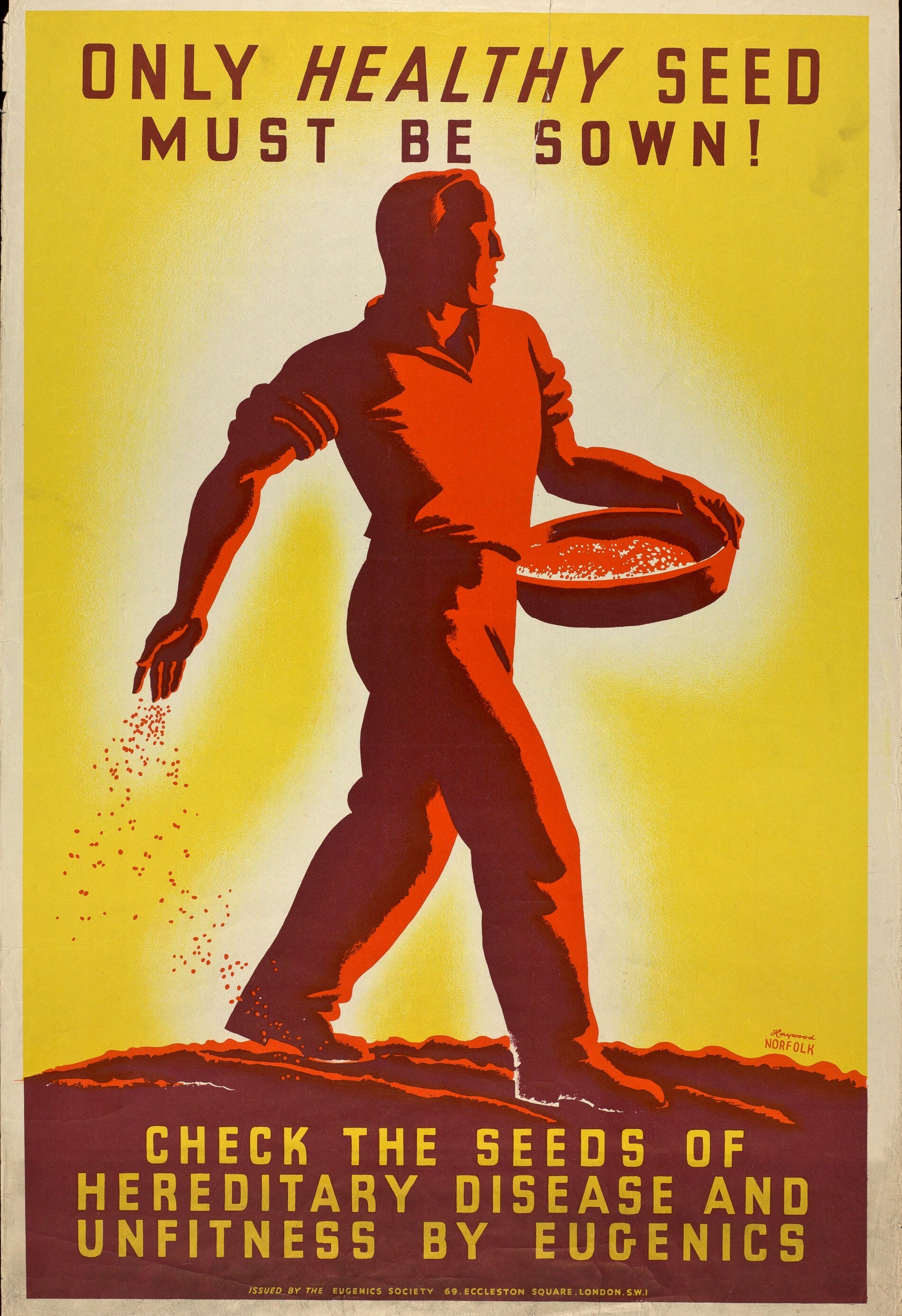
With contemporary US fascism, and specifically in terms of MAHA, it’s difficult to draw easy comparisons because, for one, much of the eugenics is more ‘positive’ eugenics (in the sense of encouraging certain people to reproduce rather than limiting birth rates of others). In addition, much of MAHA is based on emphasizing environment rather than genetics or perceived genetics. I think there are two reasons for this. 1) Many in MAHA do not really believe in evolution and therefore emphasizing genetic factors comes into conflict with strict Christian ideology. 2) By emphasizing environmental factors one can emphasize traditionalism (getting rid of certain preservatives, pushing raw foods etc) as well as deny support or treatment for heritable conditions. This pushes eugenics into line with a ‘it’s the responsibility of the parents’ kind of thing. It’s pseudo-libertarian in how it advocates for small government and personal choice.
This is especially evident in how the Trump administration via RFK Jr has handled ASD (Autism Spectrum Disorder). They separate certain forms of autism under the name of ‘severe’ in order to allow mainly right-wing mothers to claim victim-hood and weaponize their children to claim political grievances. This in turn, allows environmental claims to be targeted in order to punish political enemies and allow for grifting on the right (alternative medicine, supplements, etc.). MAHA’s eugenics are traditionalist and play off of fake soft-inheritance/environmental inheritance rather than a pseudo-scientific understanding of genetics being falsely correlated with ‘superior’ traits (as in the case of the Nazi party). In terms of historical comparison, the early days of Fascist Italy (prior to the alliance with Hitler) are probably the most similar to contemporary US eugenics.
What can students expect from your upcoming course this June?
Besides discussing the issues mentioned above, students can expect an in-depth analysis of the history of eugenics, an analysis of the abuse of genetics and sociobiology, as well as a discussion of the history of the concept of race. For me it is important that students understand how biological science can be wrestled away from the center and from the right rather than merely abandoning the popular discourse on biology, believing it to be merely a tool of technocratic state power.

When it comes to producing research and teaching, the relationship between the humanities and the traditional structures of the academy is more tenuous than ever. Where do you see the future for new avenues and institutions in research today?
When I first started becoming involved in para-academic studies 12 years ago, it was largely due to the fact that the kinds of things I and others were interested in were not present in the academy. Our courses felt like worn out deserts at the conceptual level. Nowadays, it is more a necessity at the structural level. Generalized austerity present then has only worsened and accelerated due in no small part to more center right thinking and the techno-fix thinking making the humanities seem irrelevant. I think there is an assumption that video essays or learning in different forms must necessarily be of less value than sitting in a traditional classroom but I think the latter has become a privilege that few can afford. My hope is that online learning can become something that is not seen as a lesser or simply faster version but something that is more sustainable especially as it can remove the increasingly bloated management class from higher ed.